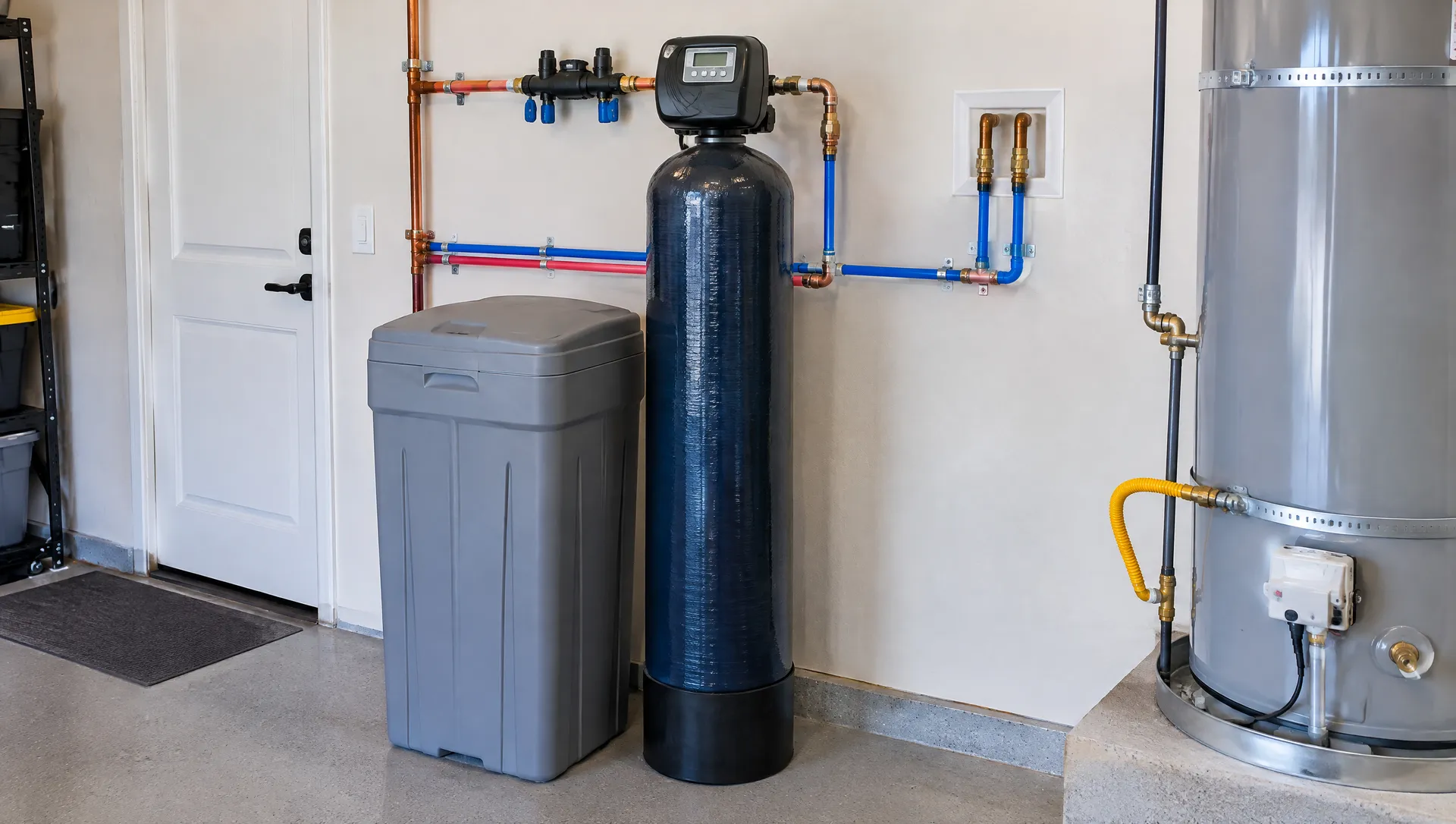
Gilbert Water Softeners
Water Softener Installation in Gilbert, AZ
Salt-based water softeners sized to your hardness and household, installed on your softener loop with a bypass and proper drain.
Gilbert Water Softeners
Salt-based water softeners sized to your hardness and household, installed on your softener loop with a bypass and proper drain.
A water softener removes the calcium and magnesium that cause hard-water scale. Water passes through a tank of resin beads that trade those minerals for sodium or potassium. When the resin is full, the softener regenerates: it rinses the beads with salt brine from the brine tank and sends the minerals down the drain.
Gilbert's tap water comes from Salt River Project and Central Arizona Project canal water, treated at the Town's North and Santan Vista water treatment plants, plus groundwater pumped from Town wells. River water and groundwater both carry dissolved calcium and magnesium, the minerals that make water hard and leave scale behind.
The right size matters. A softener that is too small regenerates constantly and wastes salt and water; one that is too large can let the resin sit unused. We test your water, count the people in the home and look at your bathrooms and fixtures, then recommend a capacity and a metered valve that regenerates based on the water you actually use.
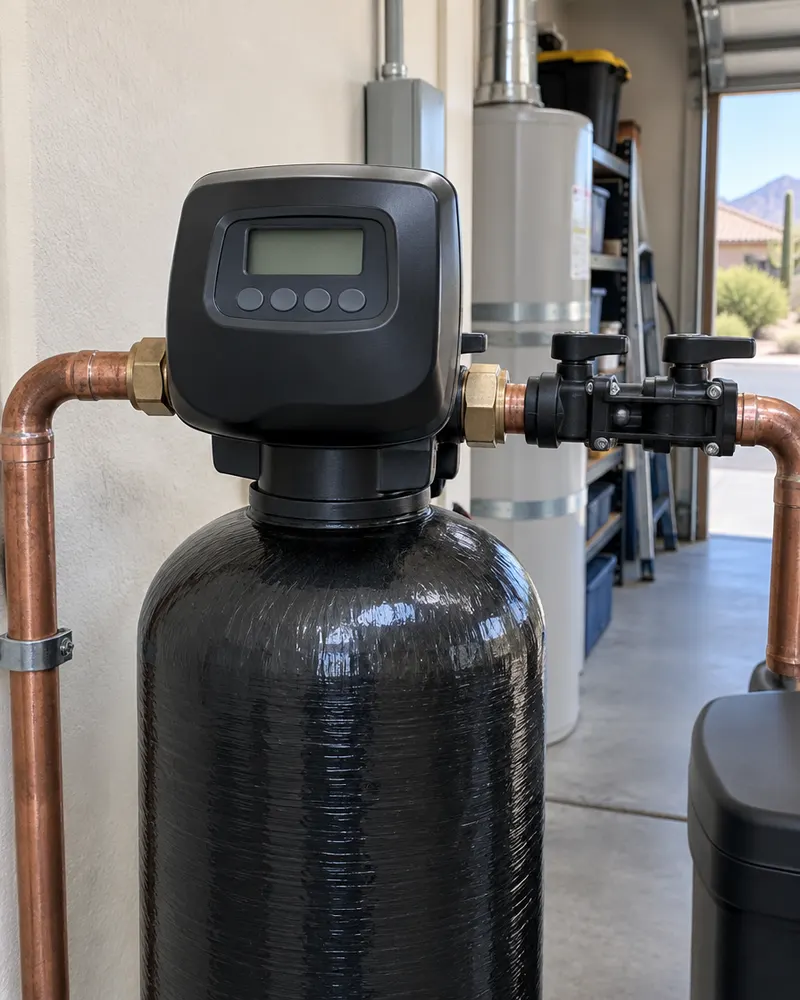
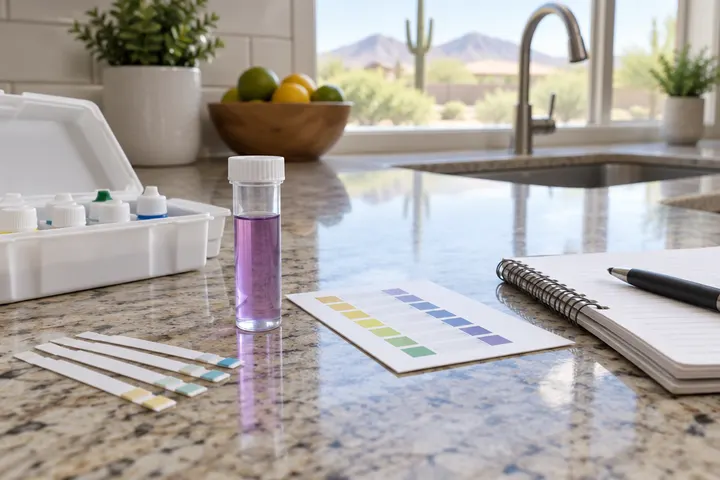
Hardness and a few other basics measured at your tap, so the softener is sized to your water and not a guess.
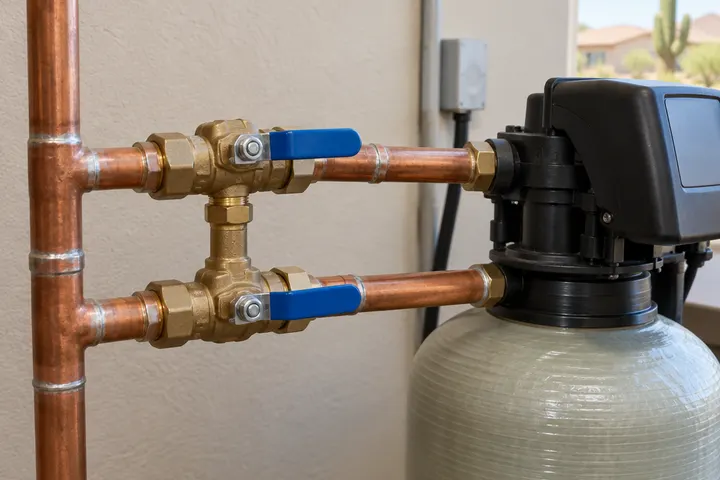
A bypass lets you shut the softener off for service or send hard water to the hose bibs without touching the plumbing.
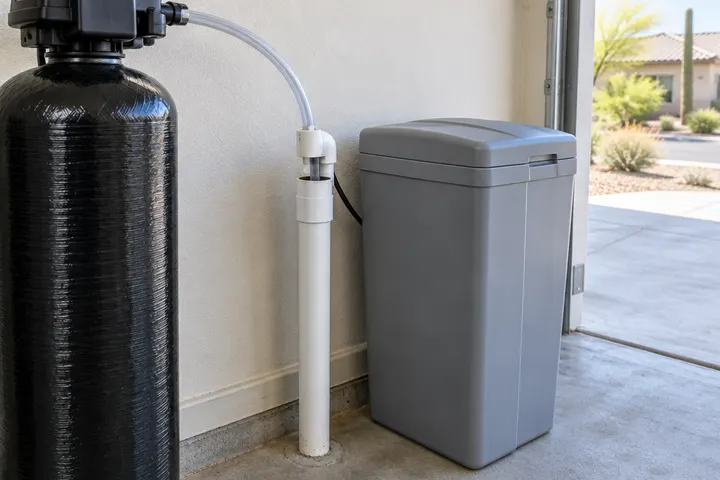
The regeneration drain is run with an air gap to an approved drain, and the brine line and overflow are set up so the salt tank does not flood.
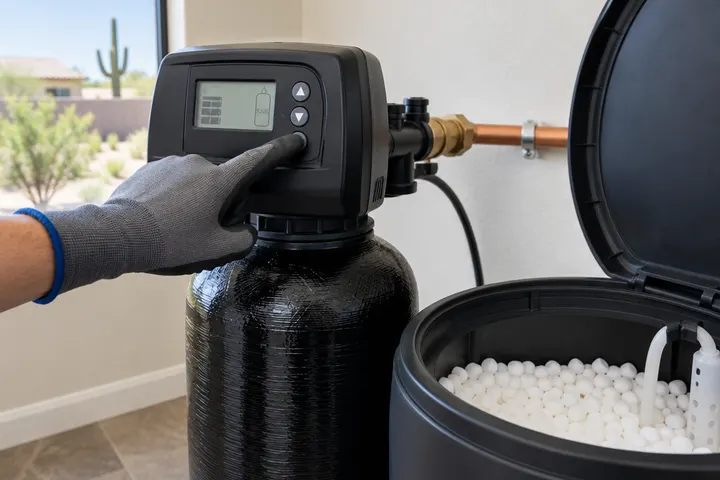
We program the valve for your hardness and household, start the first regeneration and show you how to add salt and check the system.
| Regenerant | How it works | Cost to run | Notes |
|---|---|---|---|
| Sodium chloride (salt) | Standard regenerant for ion exchange | Lower | Adds a small amount of sodium to softened water |
| Potassium chloride | Same process, potassium instead of sodium | Higher | An option for households limiting sodium |
Either one works in the same softener. Many homeowners use salt for the whole house and drink reverse osmosis water from the kitchen sink.
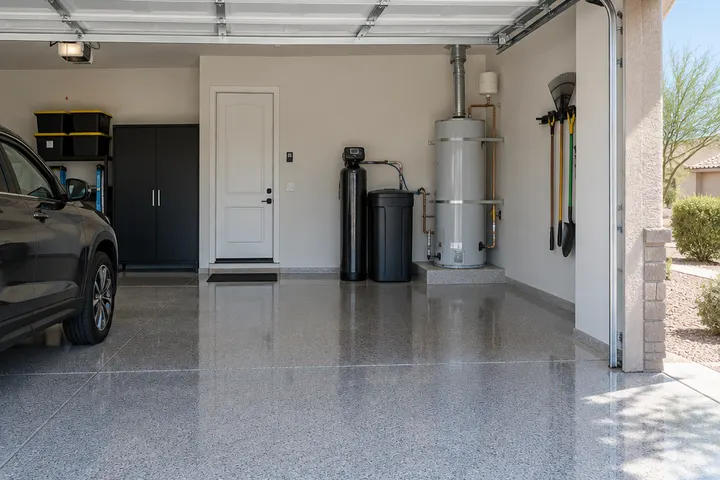
Most Gilbert softeners live in the garage where the softener loop comes in. Equipment is set level, out of the way of cars and storage.
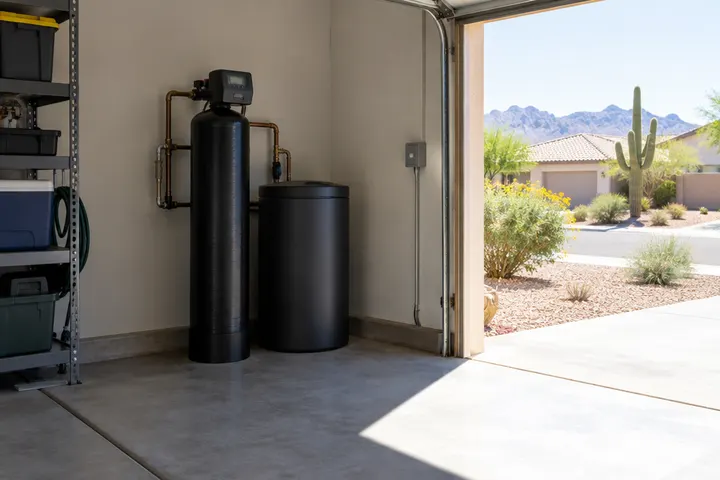
Garages get very hot in summer. We keep the brine tank and valve out of direct sun where we can and check that the control head is rated for the space.
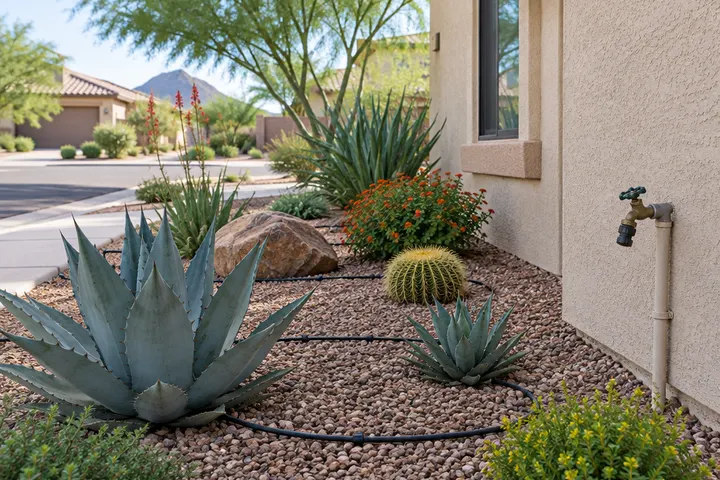
Landscape irrigation is usually tied in before the softener so you are not softening water for the yard. We check what your loop feeds.
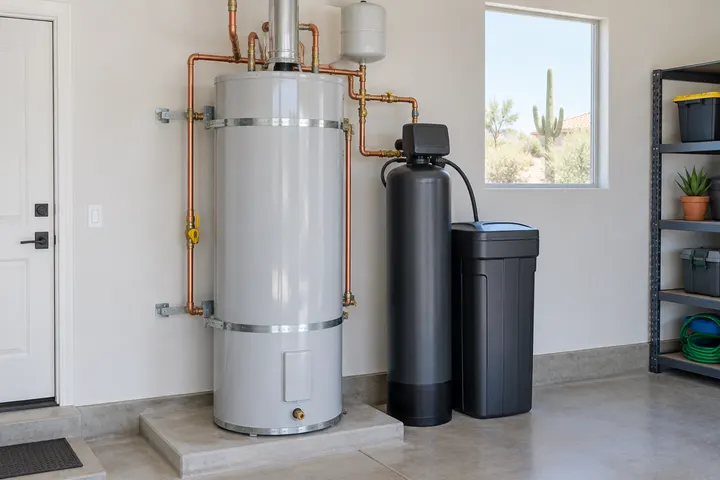
Soft water keeps new scale from forming in the water heater, which is one of the main reasons Gilbert homeowners add a softener.
On a home with an existing softener loop and drain nearby, installation usually takes a few hours. Adding a loop or running a new drain adds time.
It depends on your hardness, household size and water use. Many homes add a bag or two a month. We set the valve so it regenerates only when needed, which keeps salt use down.
Yes. We disconnect and haul away the old softener and brine tank as part of the replacement.
Size is based on your water hardness and how much water your household uses each day. We calculate it after testing your water rather than picking a standard size.
Tell us about your home and any equipment you have now. We will test your water and recommend a size.
Free estimate, no obligation